Showing posts with label New Zealand. Show all posts

Sunday, 24 June 2012

Fly Fishing Catch and Release


Once you make the decision that you want to become part off the world of fly fishing, you have to then decide if you are going to keep your catches or release them back into the water safe and sound. Some fishermen keep all the fish they catch, others release all that they catch, and some choose to use a combination of the two.

These fly fishermen keep only what they are going to eat, or give to other people to eat, and release all of the other fish they catch.

If you decide to practice fly fishing using the catch and release method, it is very important  that you crush the barb of the hook you are going to use. The other choice is to use a  hook without barbs. This is done to avoid any unnecessary injuries to the fish. It is also important to keep the fight as short as possible so the fish does not become overtired. At the first opportunity, bring the fish to hand but do not take it out of the water. While holding it under the water, remove the hook using a pair of fishing pliers.

If the fish seems to be too tired to swim away,  hold it gently just under the surface of  the water with one hand around its caudal wrist, which is just ahead of the tail. With the other hand, support the fish under its belly. Rock the fish gently back and forth making sure that the water enters its mouth and flows over its gills. Using this method, the fish should gain its energy back quickly. When you feel the fish try to pull away,  gently release your hold on it. Using the catch and release method of fly fishing can be very rewarding.

Often fishermen believe they should release the smaller fish that they catch and keep the larger ones. They might not be aware that the larger fish usually represent the more genetically suitable spawners. They are the ones that are the most valuable fish for keeping a healthy species. It is wiser to keep the smaller fish to eat and release the larger ones back into the water.

Some people while fly fishing,  feel that it is all right to catch as many fish as possible as long as they release them all. However, catch and release is not foolproof. Many fish are injured during the process and some even die. At times, even though the fisherman doesn't keep any of the fish he catches, the overall fish mortality rate for that day is higher then if he had caught and kept the legal limit. Most fish, even if they are not physically injured, will sulk for a while after they have been released because of the trauma of being caught and released.

Catch and release fly fishing can be a wonderful way to experience the sport. Every release of a fish contributes to the conservation efforts that ensures the future of having future stocks of fish.

Enhanced by Zemanta


As seen on : Let Them Live - Catch and Release Fly Fishing

Wednesday, 29 February 2012

Fly Fishing Equipment

Български: Изкуствена мухаImage via WikipediaEnglish: strikeindicator fly fishing Deutsch: ...Image via WikipediaJust as with any other sport, the equipment you use when fly fishing can be very important.  There are various types of equipment that you need when you undertake fly fishing, and be prepared because some of it can get quite expensive!

Of course, you’ll need a rod and reel.  What type of rod you choose depends on the type of fish you will be angling for.  Fly rods are ranked according to their net weight capabilities (nwt).  The nwt number will tell you what type of fish you will be able to catch.  Fish that weigh 8 pounds will require at least an 8 nwt rod, etc.   The larger the nwt number, the larger fish you can catch.

Some rods are multi-rated (e.g. 7-9 nwt).  These rods are good to use because they can accommodate a variety of fish, but multi-rated rods tend to be less flexible than single rated rods. 

Rods are made of fiberglass, graphite, or bamboo.  Fiberglass rods are durable and less expensive.  Fiberglass rods are best for beginning fly fishermen because they can be used in a variety of situations.  Graphite rods are lighter and will give you more fighting weight when it comes to landing a fish.  Bamboo rods can be expensive, but they are extremely strong and are suited to a more laid-back casting style.

Your fly line will need to match the nwt of your rod.  If you have an 8 nwt rod, you’ll need to use an 8 nwt line.  It is acceptable to go one or two sizes above or below your rod weight (i.e. 9 nwt or 7 nwt).  Buy line that is strong and durable.  Some lines are specially designed for freshwater, saltwater, etc.

You will also need to have a durable net that you can carry with you.  After the fish has lost its will to fight, a good net is used to scoop them out of the water.  This can be a big part of your fly fishing equipment because without a good net, you won’t be able to get your fish out of the water!

Having the right fly fishing equipment is important for both the beginner as well as the experienced angler.  As you get better and better at the sport, you will begin to see how important having good equipment can be.  You can always upgrade, so it’s good to start out small and work your way up to the more expensive stuff.  Your fly fishing equipment can make a world of difference between landing that big fish or catching an ordinary one.

Enhanced by Zemanta

Friday, 17 February 2012

Fly Tying for Fly Fishing

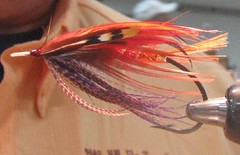
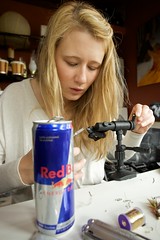
Steve Brocco Tri-Color (steelhead fly)Steve Brocco Tri-Color (steelhead fly) (Photo credit: andrewb823)Adams Dry Fly #10 Barbless HookImage via WikipediaPlate I from George M. Kelson's The Salmon Fly...Image via WikipediaFly Tying Demonstration At Atlanta Fly Fishing...Image via WikipediaFly Tying and Red BullImage by TenkaraAshley via FlickrOne of the best parts of fly fishing is learning the art of fly tying.  While you can buy pre-made flies, there’s nothing more satisfying than tying your own flies and being able to share with your friends the fact that you caught a 20 pound fish using a fly you made yourself.  While it’s not complicated, fly tying for fly fishing can be a very delicate art.

The first piece of equipment you will need when undertaking fly tying is a fly vice.  These hold your hook while you are tying it together.  You’ll want a vice that can hold all sizes and shapes of hooks and that is easily adjustable.

Get a bobbin that will hold your thread.  A bobbin will keep your thread tight and organized while you are tying your fly.  Bobbins come in a variety of sizes, but they all basically do the same thing.  Spend just a little bit more money on a bobbin and you won’t have to worry about cut threads before you are through.

You need to also splurge on a good pair of scissors.  To start out with, one pair of scissors is enough, but as you get better at fly tying, you’ll want to have a variety of shapes and sizes to meet the needs of the flies you are tying.  The loops should fit your fingers comfortably, and they should be kept sharp.

Hackle pliers are small pliers with enough constant tension designed to wrap hackle feathers around the hook.  As with scissors, they come in all shapes and sizes, but they all do basically the same thing. 

Find a good bodkin too.  A bodkin is basically a needle in a handle.  You can use a bodkin not only to tie the fly, but also for delicate work that requires a small, sharp point like separating out pieces of feather and fur.

Of course, you’ll also need a large selection of feathers and fur to match the different types of flies you want to match.  Mink fur and pheasant feathers are good materials to work with as are peacock feathers.

There are several books and websites available that can teach you fly tying for fly fishing as it can’t really be explained in a few short paragraphs.  The best way to learn how to tie your fly fishing ties is to experiment and keep doing it.  You’ll eventually find techniques that work for you and be well on your way to becoming an expert on fly tying for your fly fishing needs!

Enhanced by Zemanta

Sunday, 8 January 2012

Sage Fly Fishing Gear

The Sage company has been producing quality fly fishing gear for many years.  They offer quality, top of the line fly fishing rods, reels, and lines to the beginning and experienced fly fisher.  They take pride in the quality of their equipment producing rods and reels that many fly fishermen use exclusively.

They design and test their hand built gear with one thought in mind:  maximum fishability.  That term was coined by the company to represent the type of performance that will help you cast better, fish more effectively, and have more fun while fly fishing.

Their company offers the fly fisherman all sorts of advice and tips on how to select the right rod for you and what is important to look for in your fly fishing equipment.  Sage rods and reels have long been the choice of many fly fishermen all over the world.

When you are just beginning to get interested in fly fishing, it’s easy to get frustrated at the amount of information you need to know.  However, those same frustrations are also felt by experienced fly fishers that provides them with the challenge and excitement that makes the sport so compelling.

As we’ve said, Sage rods are hand built which makes them quality products.  They manufacture nine different series of rods in a variety of models and sizes for every fishing situation.  They have medium to ultra fast action rods to suit many types of fly fishers.

Their website, which can be found at www.sageflyfish.com also boasts many new product lines and accessories that all fly fishermen can use.  They carry hats, t-shirts, rod and reel cases, fly lines, and much, much more. 

Their new Z-Axis series of rods has breakthrough technology that is significantly stronger, lighter, and easier to cast.  That makes this new line of rods great for beginners, and also experienced fly fishermen.  They implement their exclusive Generation 5 technology that makes their rods unique and high end.

When you buy a Sage fly fishing rod, you are getting a quality piece of fishing gear.  But that quality doesn’t come cheap.  Rods range in price from $400 to $700, but they do come with a guarantee.  Plus, if anything happens to your rod, they offer a rod repair service.

Many sporting goods stores and specialty fishing shops carry Sage fly fishing rods as do many online retailers.  You can go to their website and click on the “Buy” link to find a retailer near you that carries their equipment.

Sage fly fishing equipment is well known in the fly fishing world as a trusted manufacturer of valuable fly fishing gear.  Check them out for the best in the sport!

Enhanced by Zemanta

Tuesday, 27 December 2011

Northern California Fly Fishing

One of the best things about California is the nice weather.  For people who love to fly fish, Northern California is a paradise on the West Coast.  Many streams in Northern California stay open year-round offering great options for fishing trips.  There are some great options for the avid fly fisher when in Northern California.

The lower part of the Sacramento River is a prime place to catch California’s largest rainbow trout.  The river provides amazing year-round fishing opportunities.  You can catch some amazing fish in both winter and spring, but spring brings a huge caddis fly hatch that brings the fish out in droves.  You can also find some great salmon catches on the river – especially in the fall and winter.

Feather River is a great place to catch steelheads.  Fishing on this river is exciting, productive, and challenging all at the same time.  The best fishing is in the fall where adult steelheads weighing over four pounds can be found quite easily.  In the spring, you will also find some great opportunities to fly fish for some record catches.

If you’re looking for a challenging fly fishing experience in Northern California, you may want to look at the East Fork of the Carson River.  This stream provides trout anglers with many different experiences - access being one. The narrow, fast-flowing upper reaches, above Wolf Creek, are accessible only by a rough four wheel drive trail, on horseback, or by foot.

This is a classic freestone stream with lots of riffles, rapids, deep runs, and pools. These conditions create excellent habitat for stoneflies, caddis flies, and some species of mayflies throughout the Carson drainage.  Large fish are consistent on the Carson, especially around the Nevada border where the river branches off providing a great place to find the fish.

The Truckee River is the largest of three major river systems in the Northern California/Reno area.  The good weather provides year-round fly fishing with easy access, beautiful canyon scenery, and feisty wild trout.  Experts rate the Truckee as one of the best fly fishing rivers in Northern California.  It is, however, a tough river to fish because of the current where it flows into the Nevada area.

These are only a few of the myriad of choices you have available to you for fly fishing in Northern California.  You have a lot of options to catch some amazing fish plus, you can enjoy fly fishing year-round in the balmy Northern California weather.  It can be a great opportunity for you to hone your fly fishing skills and plan a wonderful fly fishing getaway.

Enhanced by Zemanta

Saturday, 17 December 2011

Fly Fishing Calendar

Fly casting practice from the terraceImage via Wikipediafish & chipsImage by David Ascher via FlickrWhat are the best times to try and schedule a fly fishing expedition?  When we talk about a fly fishing calendar, we aren’t referring to a printed date book that you can hang on your wall.  We are talking about targeting and specifying the right times to fish and the right places to fish at.

The things you need to look at most when considering a fly fishing calendar is when the water will be at the right temperature that is prime for catching fish.  Depending on the area you are looking at for your fly fishing trip will depend on the right time to go.

In some places like California, the fishing is pretty good year-round.  While in other places such as Washington, you’ll want to avoid the water in the winter as the cold temperatures will stress the fish and they won’t be as plentiful.

Generally, the fly fishing calendar shows the best fishing in the spring and summer months.  Early fall will also find some places showing good fishing as well.  Almanacs can be helpful guides to guide you towards the best fishing times as can constant updating through Internet web sites.

Most places will give weekly, and sometimes daily, fishing reports on their websites.  They can tell you where the fish are biting and where the best places are to cast your line.  They generally keep these areas of their sites updated pretty regularly, so you can get quality reports just by looking at what others have to say.

Fish like warmer waters, although, there are other species that thrive in cold water such as salmon or steelhead.  In general, warm water will attract more fish.  However, if the water is too warm, the fish will be sluggish and will navigate to places where the water is cooler.

The fly fishing calendar used most often by experienced fishermen has been compiled over a period of time.  They spend a considerable amount of effort to estimate where and when the best fishing will occur.  Then they share it with others.  That’s one of the best parts of fly fishing – the camaraderie and sharing that can come about with a love of the sport.

You can compile your own fly fishing calendar with a little time and effort.  Just do your homework and keep copious notes.  When you see a trend, you’ll know it’s time to fish!  Then be sure to help your fellow fishermen as they try to figure out what you already know.  They’d do it for you!
Enhanced by Zemanta